My Bringing It All Back Home Kickstarter Campaign: The Outcome
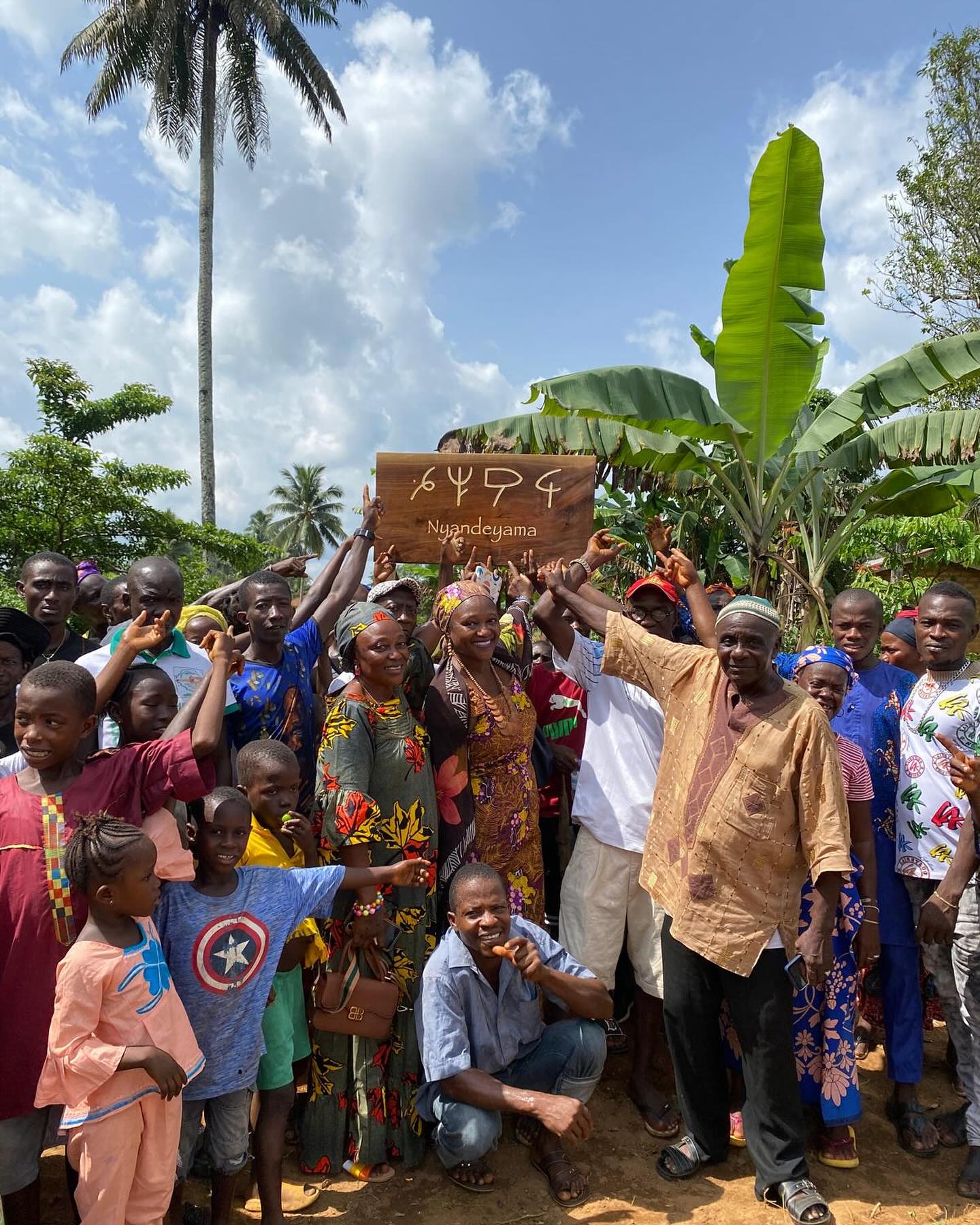
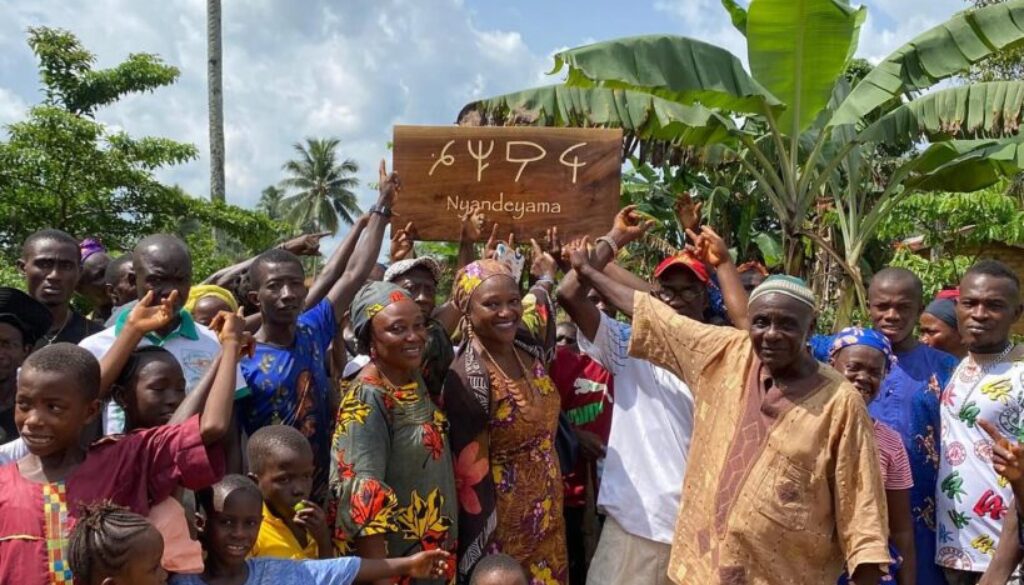
The Mende Kikakui syllabary comes home to the village of Nyandeyama, which hasd kept it alive for decades.
In early 2026, 156 stalwart people backed a Kickstarter campaign I called Bringing It Back Home.
As I wrote on the campaign home page, “Most minority communities rarely if ever see their own writing. It’s not used in schools, it’s not used for official purposes, it will rarely if ever appear in its own newspaper or books, and often these communities won’t have reliable electricity, let alone internet signal, so digital tools are out of the question.”
So my plan was to carve “Write!” as an encouragement, in ten different endangered scripts, and send them back to their communities of origin.
“This is where my carvings do the most good. This is where they stand as an item of pride for the community, an acknowledgement that someone in the outside world knows they’re there, recognizes and respects them, and supports their right to exist, their right to read and write in their own script.”
Six months later, the carving is done (and some of the ten have already headed out to their natural habitats).
Please celebrate with me as I offer you this glimpse of the carvings, the background to the scripts, and a little about the people who created and use them.
And please consider backing my next Kickstarter, which will launch in early autumn!
The Rohingya have their own culture, language and script. In the past, Rohingya has been written in the Latin, Arabic, Urdu and Burmese scripts, but in the 1980s, looking to creating a unique script that was their own and reflected their own culture, the Rohingya Language Committee completed that task under the guidance of Maulana Mohammed Hanif — hence the name “Hanifi.”
But the government of Myanmar, a predominantly Buddhist country, has refused to grant the Rohingya citizenship, and as a result most of the group’s members have no legal documentation, effectively making them stateless. Worse, from 2016, Myanmar’s armed forces and police started a major assault on Rohingya people in Rakhine State in the country’s northwestern region. Investigations by the United Nations found evidence the Burmese military had committed wide-scale human rights violations, including extrajudicial killings, gang rapes, arson and infanticide. The United Nations described the military offensive in Rakhine, which provoked the exodus, as a “textbook example of ethnic cleansing.”
Risking death by sea or on foot, some 700,000 Rohingya fled the destruction of their homes and persecution for neighbouring Bangladesh, where they found themselves in refugee camps, attempting to maintain a sense of dignity and community by preserving and teaching their language.
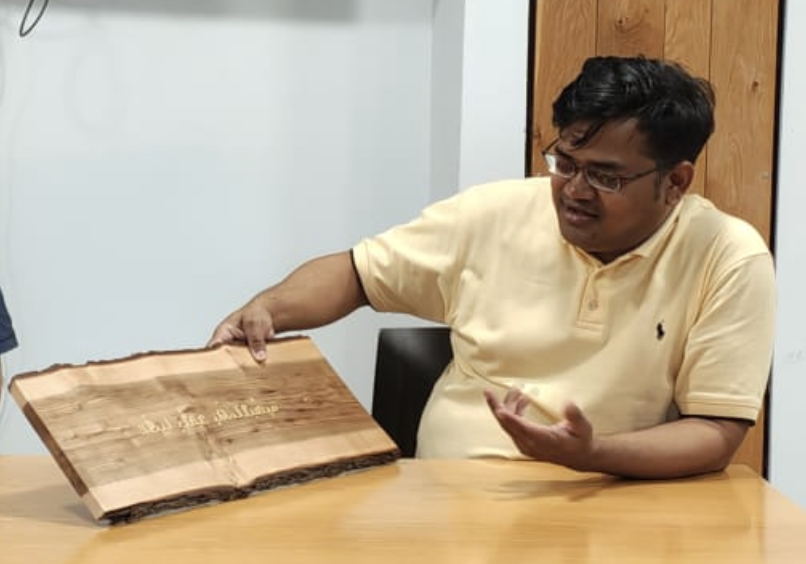
Mohammad Noor, a language activist and creator of the Hanifi Rohingya digital font (shown in photo, along with my carving), reports that there are about 50 Rohingya community Schools in Bangladesh refugee camps teaching Rohingya Alphabet Hanifi script. “We are estimating over 25 thousand kids learning in these centres. In Malaysia and Saudi Arabia there about 2 thousand kids learning in different centres. We do also have a few centres in Burma. There are number of school syllabus, general books, magazines and many other types of content already developed and still developing more.”
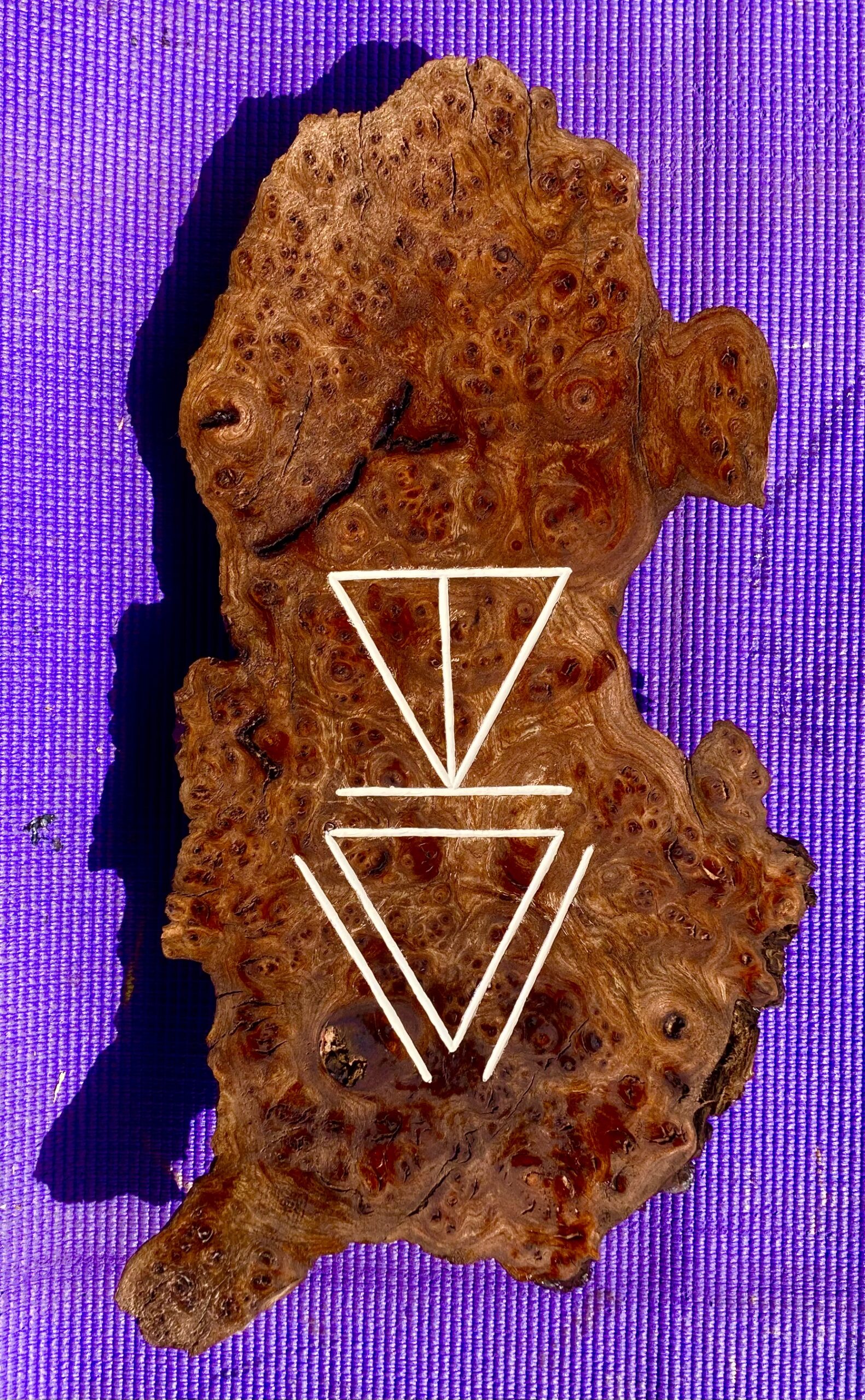
The Ditema tsa Dinoko script, also known as Isibheqe Sohlamvu, is possibly the most exact and illustrative writing system in the world, but at first glance, it doesn’t look like writing at all. It looks more like the traditional symbols of southern Africa, such as in Sesotho litema or IsiNdebele amagwalo murals, painted on the sides of houses.
The script is amazingly detailed and specific, almost a blueprint more than an alphabet. For example, it is one of only a handful of scripts in which the direction a glyph faces is significant. A triangle pointing upward indicates one vowel (i), while one facing downward indicates another (a).
There’s also an element of diagramming involved to show where and how a sound is voiced. Labials and nasals are positioned outside the triangle at the apex; dentals are indicated by two lines across the triangle from side to side, parallel to each other.
Shape is central, and vital. Curved lines, for example, indicate fricatives. Their straight-line counterparts in the same positions indicate plosives. Additional elements indicate sounds not found in English. Clicks are a bottomless hourglass shape. Syllabic laterals and trills are represented with duplication of the ordinary lateral and trill graphemes.
The writer has other opportunities usually associated with artists – the assignment of colors, for example. Drawing on traditions in the visual arts such as beadwork, color may have an associated mood or non-linguistic meaning: green may connote contentment, for example, but used negatively may imply discord or illness.
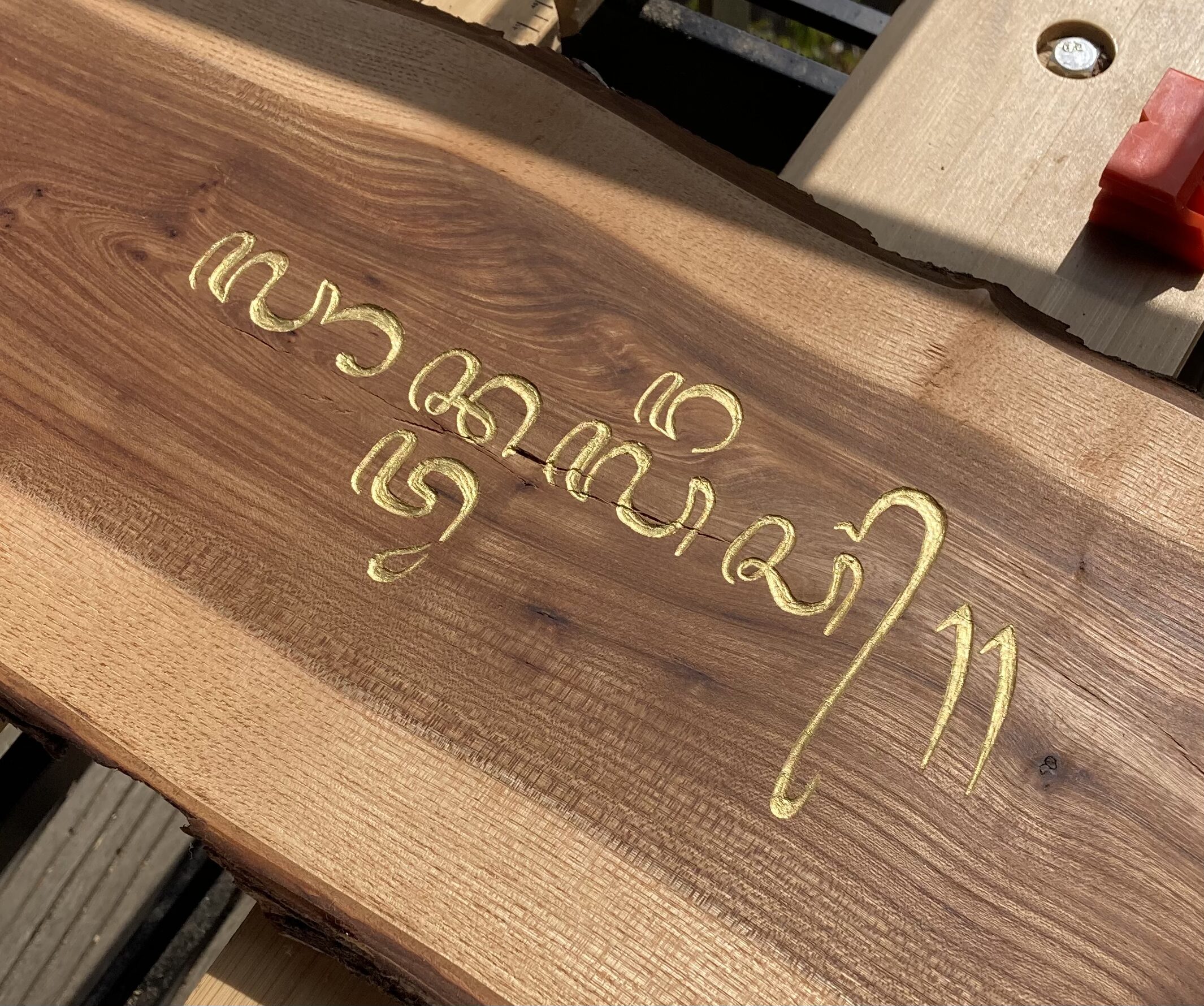
The Balinese script has been in use for perhaps as much as a thousand years, inscribed into stone, or written on lontar palm leaves bound into lontar books, especially religious and ceremonial materials. The culture’s respect for these texts, and for writing in general, can be seen by the fact that the calendar includes a holy day (named for Saraswati, the Hindu goddess of knowledge, music, art, wisdom, and learning) when Balinese people get out, clean and revere their own lontar collections.
When Indonesia achieved independence from the Dutch after World War II, the official language became Indonesian, a form of Malay, generally written in the Latin alphabet. Within two generations, the number of Balinese who read and write their traditional script was drastically reduced, to the point where even though the script was still used in religious ceremonies and documents, few younger Balinese could understand it.
Recently, though, the governor of Bali, Wayan Koster, declared that every Thursday be a Traditional Thursday, on which all Hindus working in government offices should wear traditional Balinese dress and speak Balinese. The ruling would also be in force on other celebratory days during the year.
There are reading, writing and speaking competitions in Balinese and Balinese script for school age children, and a new law requires public signs to be in Balinese language and script as well as Indonesian.
“The aim is to preserve our cultural heritage, especially in relation to literacy, which is a cultural identity of Bali,” Koster said. “I think Balinese letters, Balinese text is in our identity, a symbol of our civilization.”
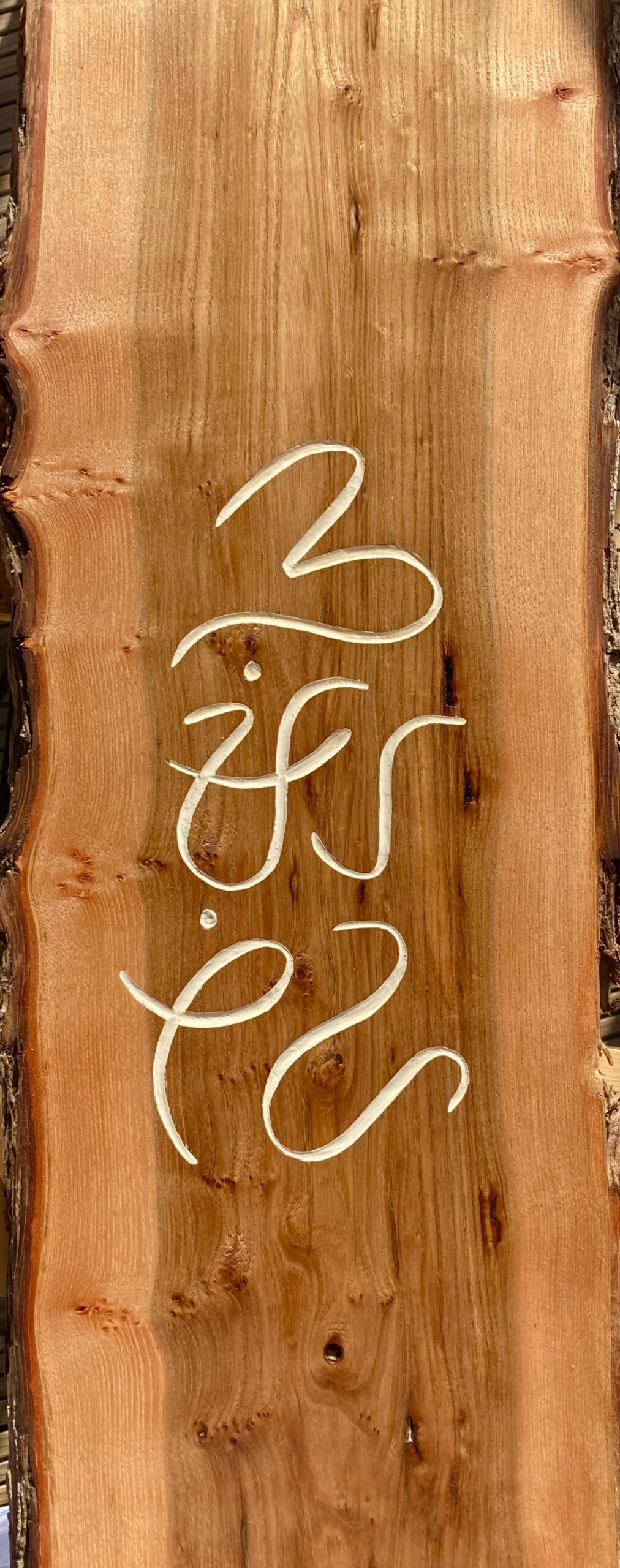
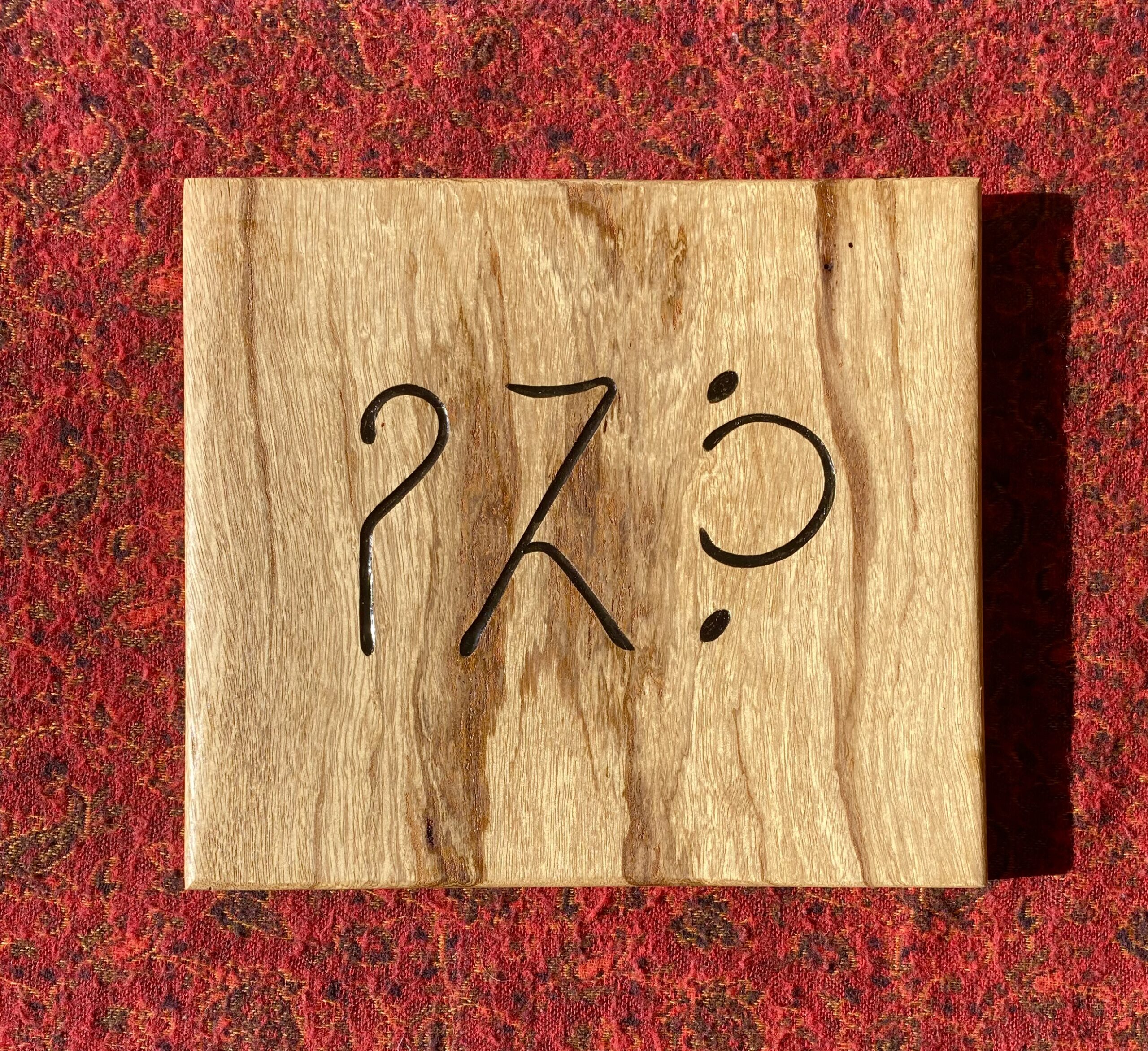
The Mende syllabary, also called “Kikakui” after its first three characters, was conceived around 1917 by Mohamed Turay, an Islamic scholar in the Sierra Leonean town of Maka. He taught his version, which had 42 characters, to his son-in-law and student, Kisimi Kamara, a tailor from the town of Vaama. Kamara went on to add another 150 syllabic characters, and he also began to promote the script outside of the Barri chiefdom, in southern and eastern Sierra Leone, beginning in the 1920s.
The script, which is written from right to left, was used for correspondence, record-keeping, producing court documents, and in writing Christian and Islamic texts. In the 1940s, however, the British established the Protectorate Literacy Bureau in Bo, which introduced a Latin-based system for Mende was taught. Not surprisingly, use of the Mende syllabary began to decline, and by the end of the twentieth century various authorities estimated its number of users as anywhere between a few hundred and zero.
Rumours of its death were exaggerated, however. As of early 2023, the Kikakui syllabary shows small but distinct signs of life. Konrad Tuchscherer, perhaps the leading active expert on West African scripts, is in Sierra Leone teaching a class in the syllabary and reports intense interest among his students, many of whom have begun writing stories and poetry in Kikakui, and collecting Mende proverbs to write in Kikakui.
And the Endangered Alphabets Project has contributed three hand-carved signs to be erected at the entrances to the three villages where the script was kept alive–in exile, so to speak–during its missing years.
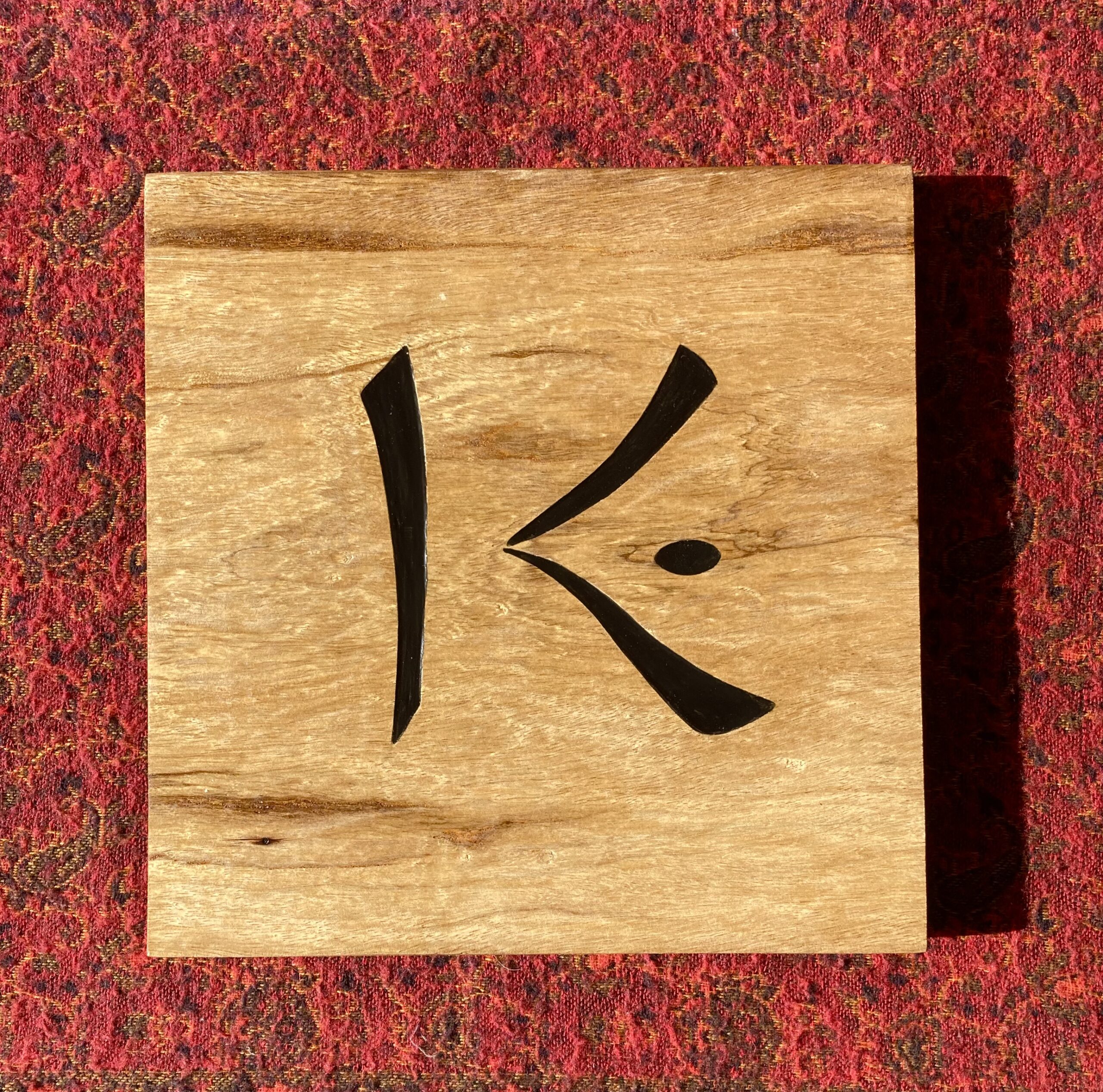
Kulitan is a script used in the Philippines for writing Kapampangan, a language spoken mainly in central Luzon.
The recent revival of traditional Filipino scripts focused largely on the dominant script of Baybayin, used to write Tagalog, even under the Japanese occupation: in 1943 the Japanese promoted its use over English so that the Filipinos would, as in the words of Prime Minister Tojo Hideki, “forget their mistaken Americanism and return to their Great East Asian roots.”
As an outsider even among outsiders, Kulitan became a medium of protest. The script was revitalised by Kapampangan writers led by Aurelio Tolentino to write anti-Spanish propaganda during the Philippine Revolution of 1896, and anti-American propaganda during the Philippine-American War and in the early years of US occupation.
More recently Edwin Navarro Camaya, Michael Raymon Pangilinan, Eliver Sicat, John Balatbat, Max Rosales and Bruno Tiotuico formed the Ágúman Súlat Kapampángan so as to promote the teaching and usage of Kulitan—especially in calligraphy.
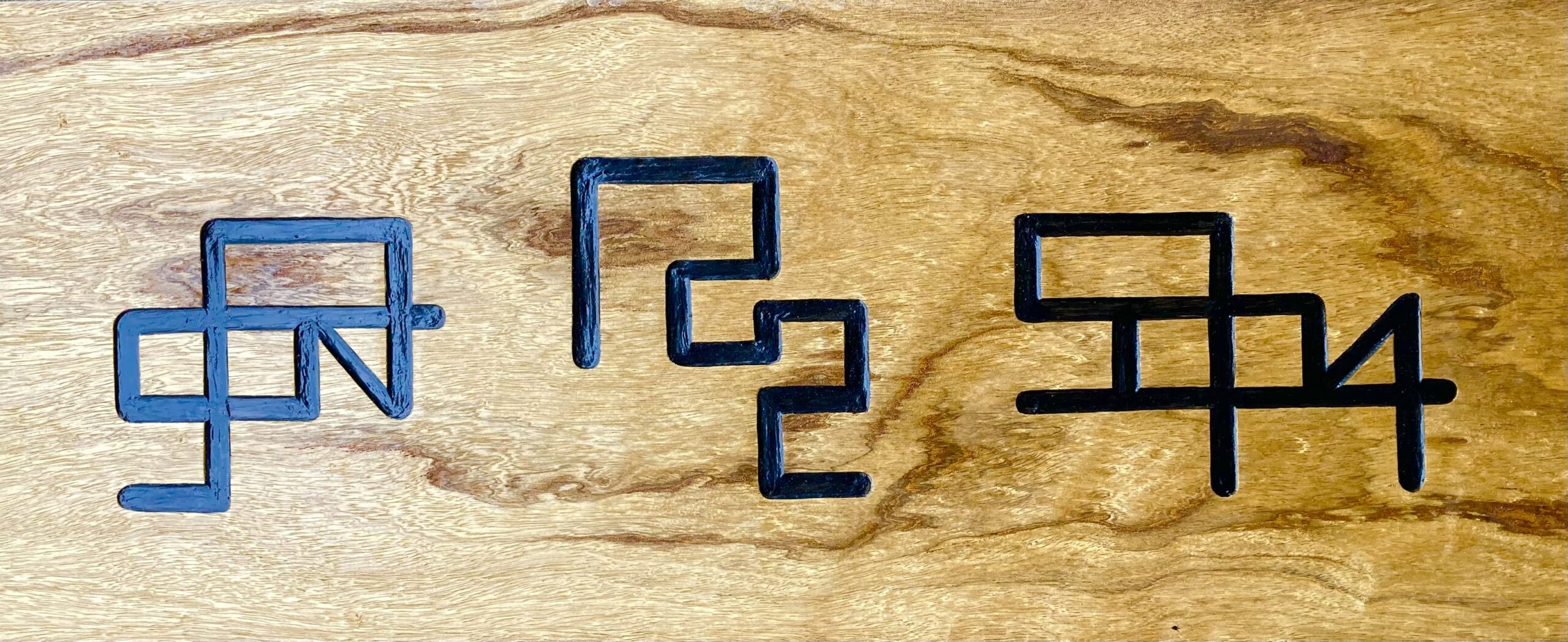
Mandombe is the only writing system in the world whose visual template is a brick wall.
In 1978 David Wabeladio Payi (1957–2013) from the Democratic Republic of the Congo, a member of the Kimbanguist Church, dreamed of Simon Kimbangu, the church’s prophet, telling him to create a writing system.
Payi’s eye fell on the exposed brick wall of his room, and he noticed that the mortar around the bricks could be seen as a series of patterns that in particular featured two geometrically opposed sacred shapes: 5 and 2.
Building on these raw materials, so to speak, he incorporated the concept that the direction in which a basic shape pointed would affect its pronunciation. He also extended the basic shapes not only left and right, but upward.
He called the new script Mandombe, a word that has three possible meanings: “For the Blacks”; “That which has been entrusted to the Blacks”; and “In the manner of the Blacks.”
His original intention was to use the script to write religious texts in the national languages of the Congo – Kikongo, Lingala, Tshiluba and Swahili – but as the script has steadily gained acceptance, its ambitions have grown as well, and the Mandombe Academy at the Kimbanguist Centre de l’Écriture Négro-Africaine (CENA) hopes it may one day be used to write all African languages.
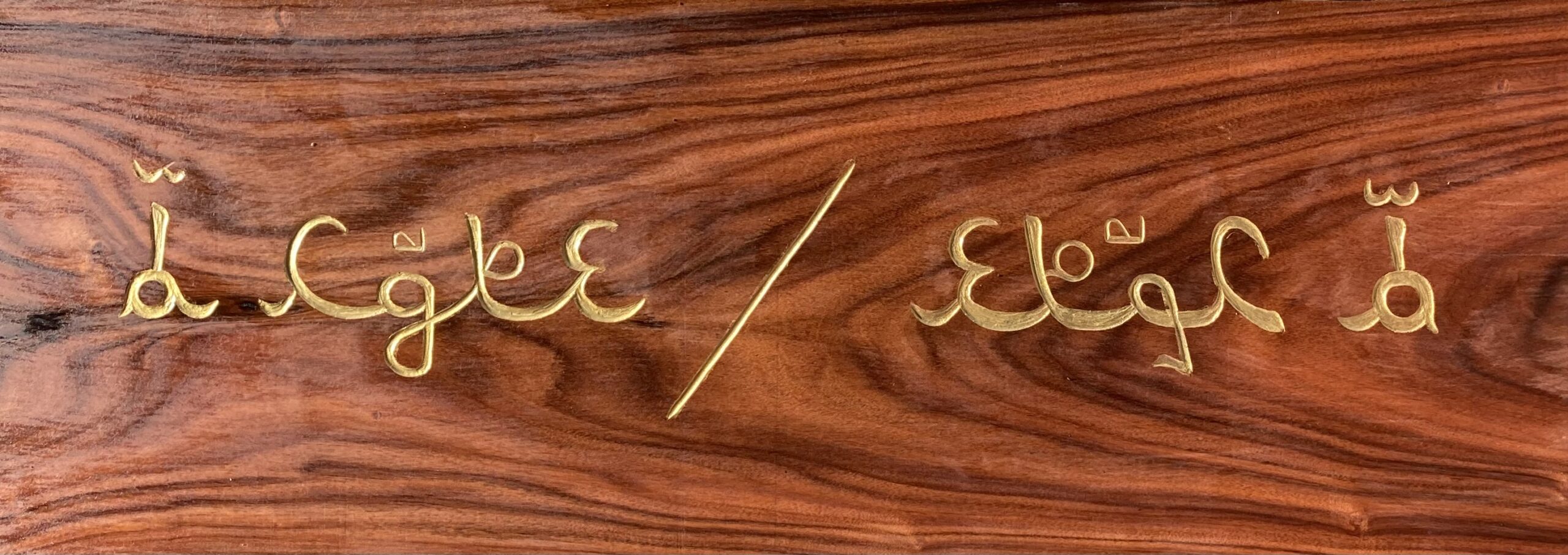
Minim is probably the only script in the world designed to be written either from left to right or right to left. This is no accident, and as with all writing systems, it says a lot about its origin—in this case, the West African country of Burkina Faso.
The overwhelming majority of the population of Burkina Faso speaks and writes either French (in the Latin alphabet, running left to right) or Arabic (right to left). The Minim script consists of two versions of each character, one facing each way: the writer simply flips the character so it is facing whichever writing direction they are using. Regardless of a person’s previous literacy, then, they can learn Minim in the writing direction they know best.
The script was created in 1982 by Mahamadi Ouédraogo for writing his native language, Mooré. In Mooré, minim means ‘knowledge’ – the script is also known as minim biisi ‘letters of knowledge’. Mooré is the most widely spoken language in Burkina Faso, however Ouédraogo is from the Western regions, where a different language, Manding, is most commonly spoken.
Ouédraogo has created two keyboards for Minim (one for each writing direction) named Minim and minim dag noore (meaning ‘gate of the [Mooré] language’). Although a smartphone keyboard would be beneficial for spreading Mooré, this is much more complex to implement. Ouédraogo has produced several YouTube videos of the Minim script and how to use it.
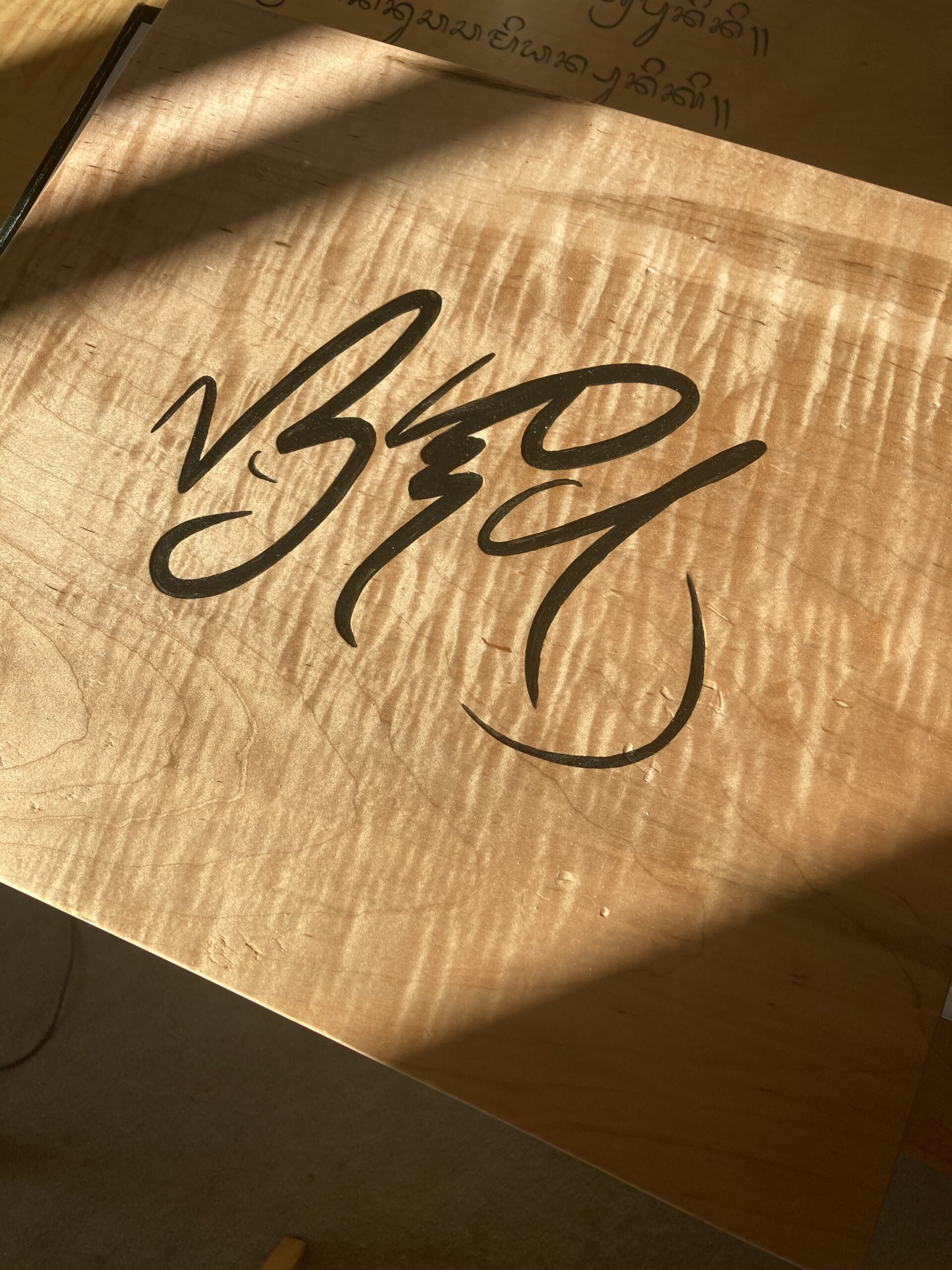
In the 1500s, when the Spanish arrived in the islands they renamed the Philippines, they discovered to their surprise that the people of those islands were already literate. A Jesuit priest, Father Pedro Chirino, wrote, “So accustomed are all these islanders to writing and reading that there is scarcely a man, and much less a woman, who cannot read and write in the letters proper to the island of Manila.”
They had been writing for perhaps a century in several related scripts, one of which was called baybayin, a term that more or less means “alphabet,” from the root baybay, meaning “spell.”
“When they write,” announced an anonymous Spanish report in 1590, “it is on some tablets made of the bamboos which they have in those islands, on the bark. In using such a tablet, which is four fingers wide, they do not write with ink, but with some scribers [the tip of a knife, or a sharp piece of iron] with which they cut the surface and bark of the bamboo, and make the letters.” And once the letters had been cut, the writer took a handful of ash and rubbed it into the thinly-incised letters to make them stand out more clearly.
Once the Spanish arrived, Baybayin was doomed to the long, slow decline of a minority writing system. In short order, Latin-script printing presses were set up and Filipinos adopted the use of pen, paper and ink, so the technological basis for their written language, and thus its very look, was lost.
Recently, though, the Philippine government has shown interest in reviving traditional scripts, with Baybayin, used for writing the dominant Tagalog language, being foremost. How effective this revival will be, and whether the other traditional scripts will likewise be promoted, remains to be seen.
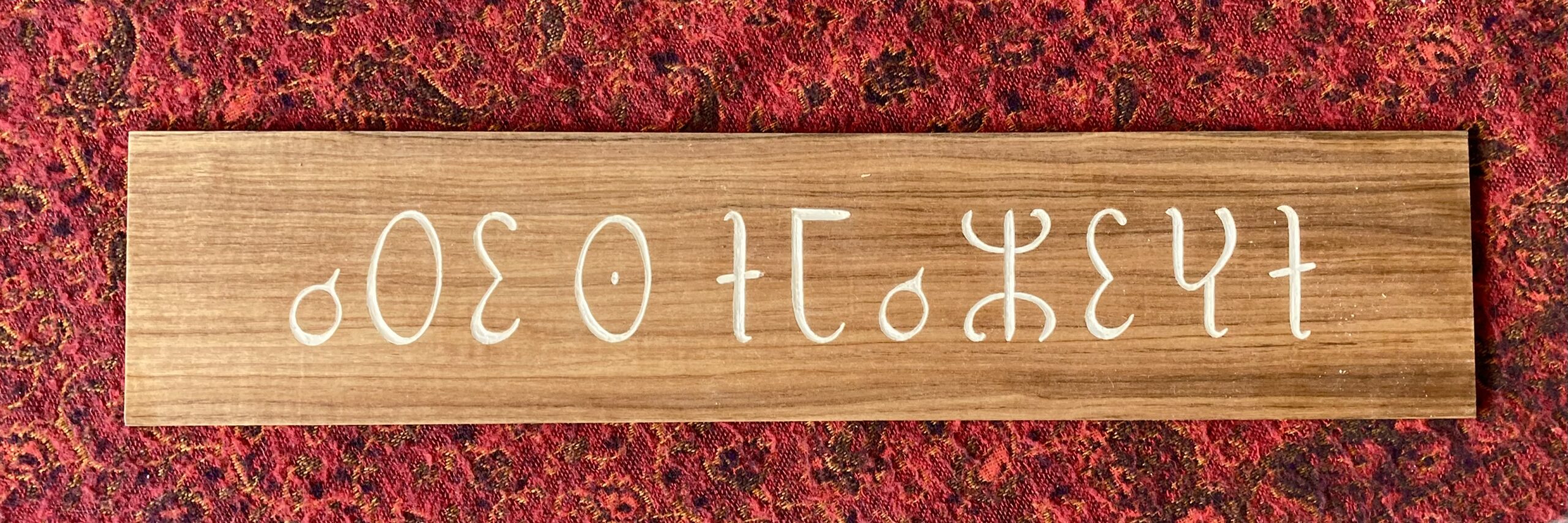
Two thousand years ago, much of North Africa – from Egypt in the east to the Canary Islands in the west, to Niger in the south – was the territory of the Amazigh people. The word means “noble men,” but the Romans gave them the condescending name barbari, meaning “barbarians,” from which emerged the name “Berbers.”
Nowadays, after centuries of incursions and colonization, the Berber are scattered throughout Algeria, Libya, Niger, Mali and Burkina Faso. As the other occupants of the region created permanent cities, kingdoms and countries, the Berber people found themselves no longer kings and queens of the desert, but outcasts. They have been subject to a depressing range of human rights abuses, not least in countries which have declared Arabic or French the official language and have endeavored to suppress or stamp out Berber language and culture.
In the mid-1960s, when a group of Algerian Amazigh writers, journalists and activists living in Paris formed the Amazigh Academy to re-establish the Amazigh identity and Amazigh rights in the face of centuries of repression, they decided to reinvent the Tifinagh script as a specifically Amazigh form of writing – and placed one of its characters, the yaz, at the heart of the Amazigh flag.
Shortly after the German colony of Kamerun was proclaimed in 1884, the King of Bamum (an area in the northwest of the colony) was assassinated, and after a civil war his heir, Ibrahim Mbouombouo Njoya, came of age and assumed the throne.
Inspired by a dream, Njoya began work on a syllabary for his native language of Bamum, even though he himself did not read or write. With assistance from at least two royal advisors, he drafted over 1000 pictographic characters representing objects and actions. This set was boiled down to 465 syllabic characters, and then over the next fourteen years, the script went through six revisions, becoming progressively smaller with each draft until it stabilised at 80 characters in 1910.
Using this script, called a-ka-u-ku after its first four characters, he wrote a history of his people, a pharmacopoeia, a calendar, maps, records, legal codes and a guide to good sex. He built schools, a printing press and libraries; he supported artists and intellectuals. This seems to have been all well and good in the eyes of the local colonial power while Cameroon was under German control, but when the French took over part of the country after the German defeat in World War I, they maneuvred Njoya out of power, smashed his printing press, burned his libraries and books, tossed out sacred Bamum artifacts and sent him into exile, where he died.
It’s a sign of how important an indigenously created script can be that despite Njoya’s death and the almost complete suppression of the a-ka-u-ku syllabary, his son and grandson held on to the script as a cultural symbol. In 2022 the Endangered Alphabets Project initiated a collaboration with King Njoya’s great-grandson and the Bamum Scripts and Archives Project to help begin the process of revitalizing the Bamum script.
