
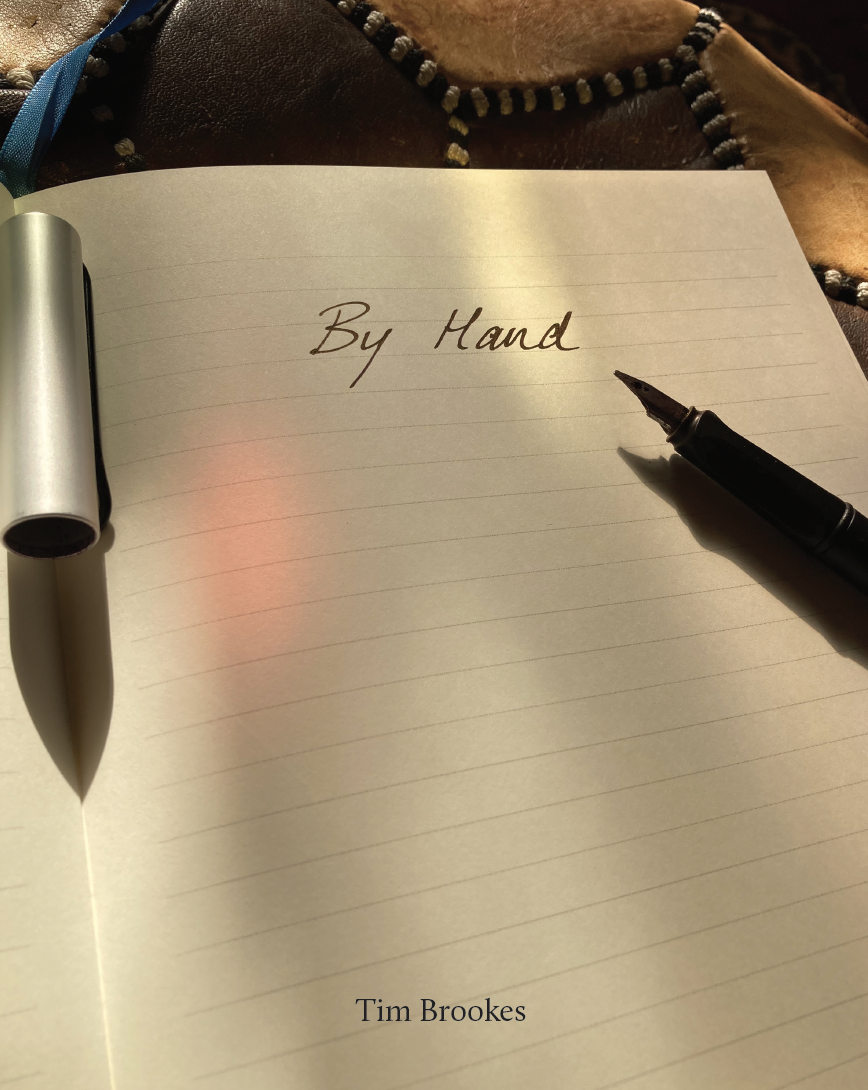
My new book, By Hand, springs from a paradox or puzzle that emerged during my fifteen years of research into endangered alphabets. It’s also the most challenging book I’ve attempted in my life, because I wrote it, in fact, by hand.
Here’s the genesis.
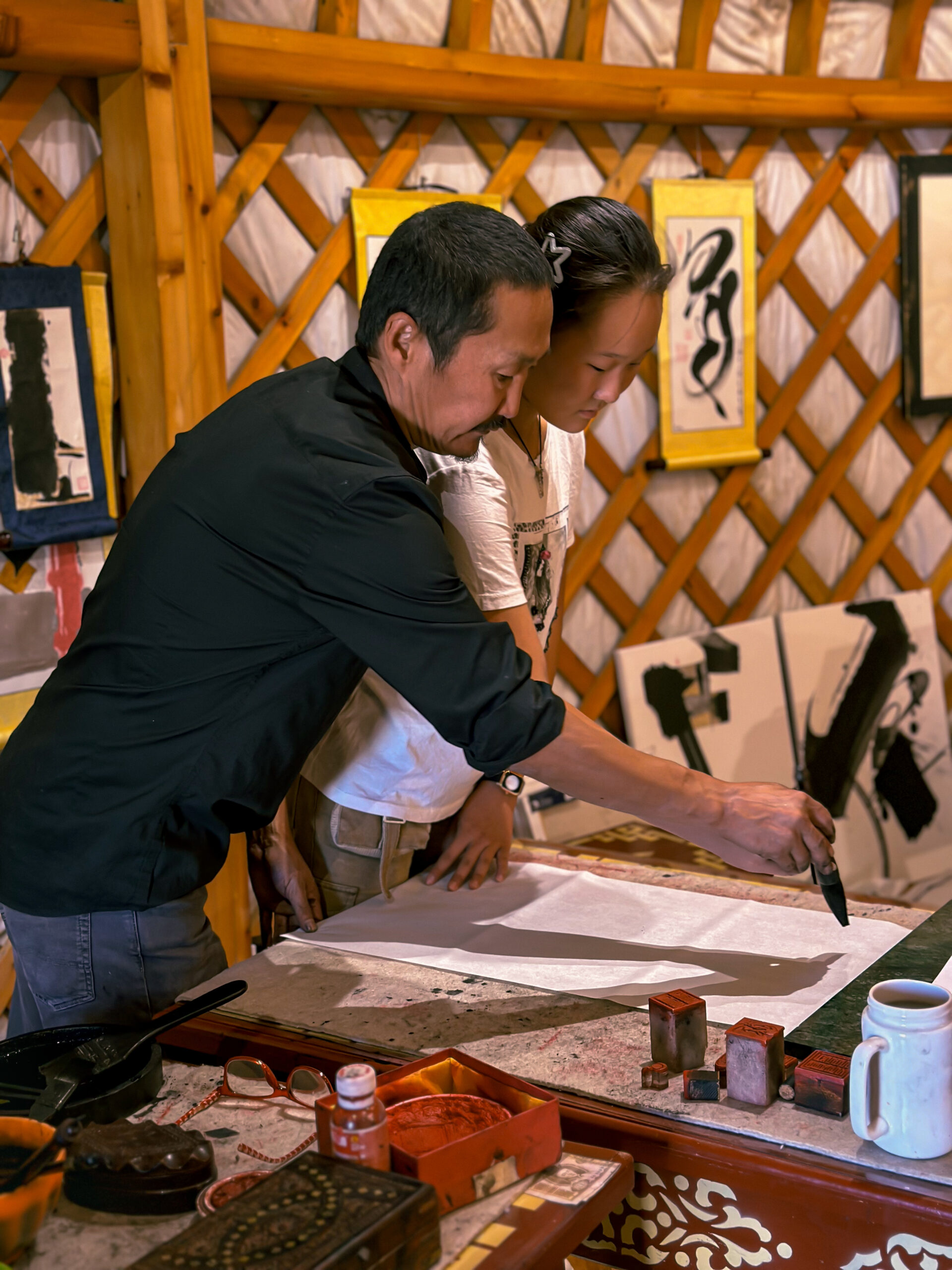
At least a dozen cultures, from Mongolia to the Philippines, are trying to save themselves—that is, to reconnect with their heritage and identity in the face of opposition and oppression—by reviving the ancient art of calligraphy, sometimes on paper with a brush, sometimes on palm leaves with a stylus, sometimes on bamboo with an engraving tool. The results are more than elegant and beautiful; they are a way of reviving traditional practices, awakening muscle memory, reconnecting present with past through an art form that brings grace and respect to their culture and giving it a voice. They are also rediscovering their traditional poetry, their sacred texts, their communal reading and writing practices. It’s a revival of their entire way of life, through writing by hand.
What makes this more than just a curiosity is that it is exactly the opposite of what is happening in the supposedly advanced West, especially in the United States, where writing by hand is being abandoned in favor of keyboards and digital devices. Far from connecting us with our traditions and our ancestors, this switch is creating a digital divide in which a younger generation cannot even read its grandparents’ letters, or historical documents written in cursive script. The National Archives are forced to appeal to folks of (ahem) a certain age to help read and transcribe literally millions of vital historical documents that can’t be read by software, or by a younger generation.
The United States leads the world in willful neglect of the art of writing. In France and the Netherlands, a schoolteacher may have to take a writing class to qualify to write on a blackboard in front of their class; in Japan a neatly handwritten resume is far preferable to a printed one, as the writing alone says important things about the applicant. My own state, Vermont, doesn’t even teach handwriting any more. Americans have lost sight of what handwriting is, how it benefits cognition, learning and retention—assets we are abandoning even as we need them most.
By Hand takes the reader on a totally original exploration of writing. Throughout the book I take the reader around the world to cultures whose writing is fascinating, beautiful, even sacred, to show the remarkable qualities writing can have when it has not been reduced to digital text, and when its main purpose is something richer than simply to convey information as quickly and easily as possible.
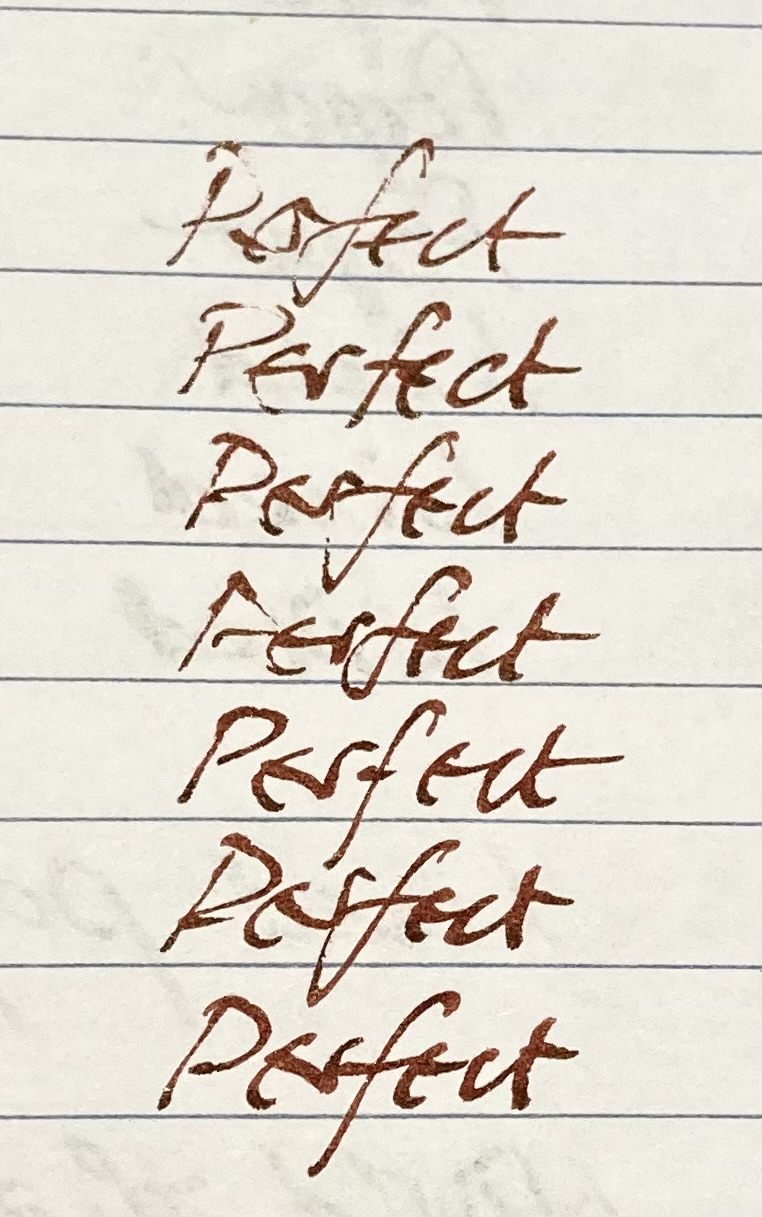 That outer journey is paralleled by an inner quest—to find out what we can learn about writing by writing by hand. I have written about hitchhiking by going back on the roads of North America with my thumb out, I’ve explored asthma from the viewpoint of an asthmatic, and death and dying by going with my mother through hospice care. In writing By Hand I went inwards to try to pioneer our understanding of how the act of writing works, what relationship develops between writer, pen and page. Letter by letter. And this unexpectedly stiff challenge turned out to be the most interesting and revealing aspect of the whole book.
By Hand is intellectually groundbreaking, yet completely down to earth, its subject familiar to all of us. “You’re showing us something that is right under our noses,” an attendee at one of my workshops said recently. “We just never thought about it before.”
Anyone who is ashamed of their handwriting will come away from this book feeling unexpectedly reassured. Anyone who has kept a journal or diary will feel validated and understood. Anyone who has bemoaned the decline of cursive handwriting in the United States will buy copies for everyone they know. And surprisingly, anyone in the field of software development who specializes in writing tools will want to take notice.
And what do I have to say about the future of the written word? The future of writing depends on what we think writing is. If we see writing as a form of communication, as a chore, as a job to be done, or as a means of retrieving and conveying information as quickly and efficiently as possible, the future of the written word may be one thing. If we see writing as the astonishing, infinitely repeatable opportunity to explore and extend our ourselves and to invite others in on that series of discoveries, then the future of the written word may be something very different.
By Hand is not a cry of “Bah, humbug!” by a curmudgeon; it is an adventure story of wonder and delight that explores the pen, and the paper, and the human mind.
Early reviews:
Vaishali: “The layout is so inviting, and I really love the way the topics unfold—it feels like a journey through the history and beauty of writing. From the tools and letters of different scripts to the deep dive into how writing shapes our thinking and cognitive development, every section offers something fascinating. It’s such a rich and beautifully crafted work—a real treasure!”
Stas: “I just started reading a few pages of By Hand. It’s outstanding. You have written it very well. I’m reading it slowly to take it all in. I was planning to write by hand today anyway as I need to send some thank you cards. This short reading has inspired me that I’m doing something special!”
Shriya: “Loved the book…it felt so special to read about handwriting which fascinates me too. I especially liked your writing about signatures! And the Mongolian script history and the shame of self/reveal of writing. It’s brilliantly interdisciplinary and reflective. It feels very zen Buddhist to read about your practice.”
Alan: “Your book was a beautiful meditation on why humans should continue this ancient act of actually writing.”
Order By Hand:
NEW UK EDITION
Softcover £27.50
US Edition
Softcover $32.50
Hardback $47.50
Digital edition (delivery via email) $7.95
By Hand Q & A
Q: I think of you as the endangered alphabets guy. Is handwriting a new departure for you?
A: Not at all–more of a continuation. The subjects are connected in two ways, one of which I saw, the other was pointed out to me by my followers. Communities with endangered alphabets are very, very well aware of the value and importance of their script, which is more likely to be traditionally handwritten as it would not have been worth anyone’s money to cast type for it. So for them, writing is handwriting–as it was for most of us until recently. The other connection is that my followers and audiences keep asking me whether handwritten English, especially cursive handwritten English, is endangered, and with the rapid rise of digital tools and AI in particular, I had to take that question seriously.
Q: Did you always intend to write By Hand by hand?
A: No, not at all. What I originally had in mind was a fairly short book, mostly photographs, about calligraphy in minority scripts from around the world. Teaching calligraphy was becoming a way to reconnect people with their culture, their past, their identity. And in fact that is still a significant part of By Hand.
But then I began realizing that in the West, especially in the U.S., exactly the opposite is happening—we’re abandoning handwriting and losing the ability to connect with or even read our own past, as part of a dash toward becoming a digital society in which the past is obsolete every six months. After making my living as a writer exclusively on keyboards for 40-plus years, I honestly didn’t even know whether I could write by hand any more, so I thought, well, if I’m going to advocate for handwriting, I’d better see if it’s even possible any longer.
Q: What was your handwriting like when you started working on this book?
A: Awful. I had used it basically for nothing but scrawling notes for so long that it looked like, well, scrawl. And also, though I didn’t realize it at the time, that came with a mentality that said “Just get it down as quickly as possible.” So even when I tried to write well, my hand would try to scribble across the page like a train wreck in progress. And though I didn’t realize it until even later, that’s exactly what my mind was doing. Working by computer had essentially trained me to try to think and compose and edit and turn it in as fast as possible. I had lost any sense of writing as graceful and dignified.
But the fascinating thing was how many people I ran into who said the same thing. They’d say, “Oh, my handwriting is terrible.” There was such a deep sense of shame. I started thinking, That’s such a powerful emotion. Where does that come from?
Q: So you’re saying that handwriting reflects one’s state of mind?
A: More than we ever realize. People have compared the pen to a seismograph needle or a lie-detector pen—it makes visible not only what’s going on in our minds but also in our bodies. There’s no difference, really. In a sense the pen illustrates how completely the two combine as one. I would sit down to write, and the first letter would be a capital W, say, and I’d realize I had no idea how I write a W. And my body would be so tense it felt that as soon as I put pen to paper I’d lose all control and the W would shoot off the page. In the end it became a diagnostic tool. I’d say to myself, “Huh. I thought I was all calm and composed, but apparently not. What’s going on?”
Q: So does that mean you got into handwriting analysis?
A: Yes, but maybe not in the way you mean. The whole forensic graphology business is mostly a TV thing, but it’s very seductive. Three different people told me they’d been told they have serial-killer handwriting, and not only is none of them a serial killer, but their handwritings were all completely different! But on the other hand, our handwriting says a hundred things about us—where we grew up, how we were educated, how excited we are about what we’re writing, how much pressure we feel under as we write—I mean, it’s no wonder that everyone’s writing is different. The word “autograph” literally means “self-portrait,” and our writing is one way in which we show ourselves to the world.
Q: But for that very reason, some people’s writing is hard to read, and some people also type faster than they write. Aren’t those good arguments for using a keyboard instead?
A: It depends what you want. Faster is not always better—in fact, in almost every case, the faster you write, the less thoughtfully you write. You bypass the act of thinking. If you write off the top of your head, you get verbal dandruff. And by using tools that are perfectly legible and uniform, you create perfect anonymity. If you get an email or see an online post, you have no idea who it is actually from. Digital tools are wonderful at some of the traditional aspects of writing, especially editing, printing and distribution. But the act of composing writing, of listening to your mind and making it visible on the page, is not an industrial process. It’s something completely different.
Q: That brings us to the subject of journals. You quote these amazing research studies that show the therapeutic value of keeping a journal. Do you buy that?
A: At first I was skeptical—not of the research, but simply because we have no mechanism that explains the results, which show not only psychological benefits but even physiological. That made me all the more curious about keeping a journal myself, which became the basis for much of the writing in By Hand. And by the end of the book—there’s a huge, huge spoiler here that I won’t tell you—that journal had become almost literally a lifesaver.
Q: You’re going to leave us hanging like that?
A: Ha! You’ve got to read the book. And start keeping your own journal to find out for yourself.
