The Kickstarter Diaries 5: Monuments and Legos
The fifth entry in my diary of life behind the scenes in a Kickstarter campaign is about things built, things written, things with meaning.
Yesterday, partly as an increasingly necessary distraction from the stress of running a Kickstarter campaign, I sat in on a seminar discussing something about which I know pretty much nothing: monuments of the ancient Mediterranean world.
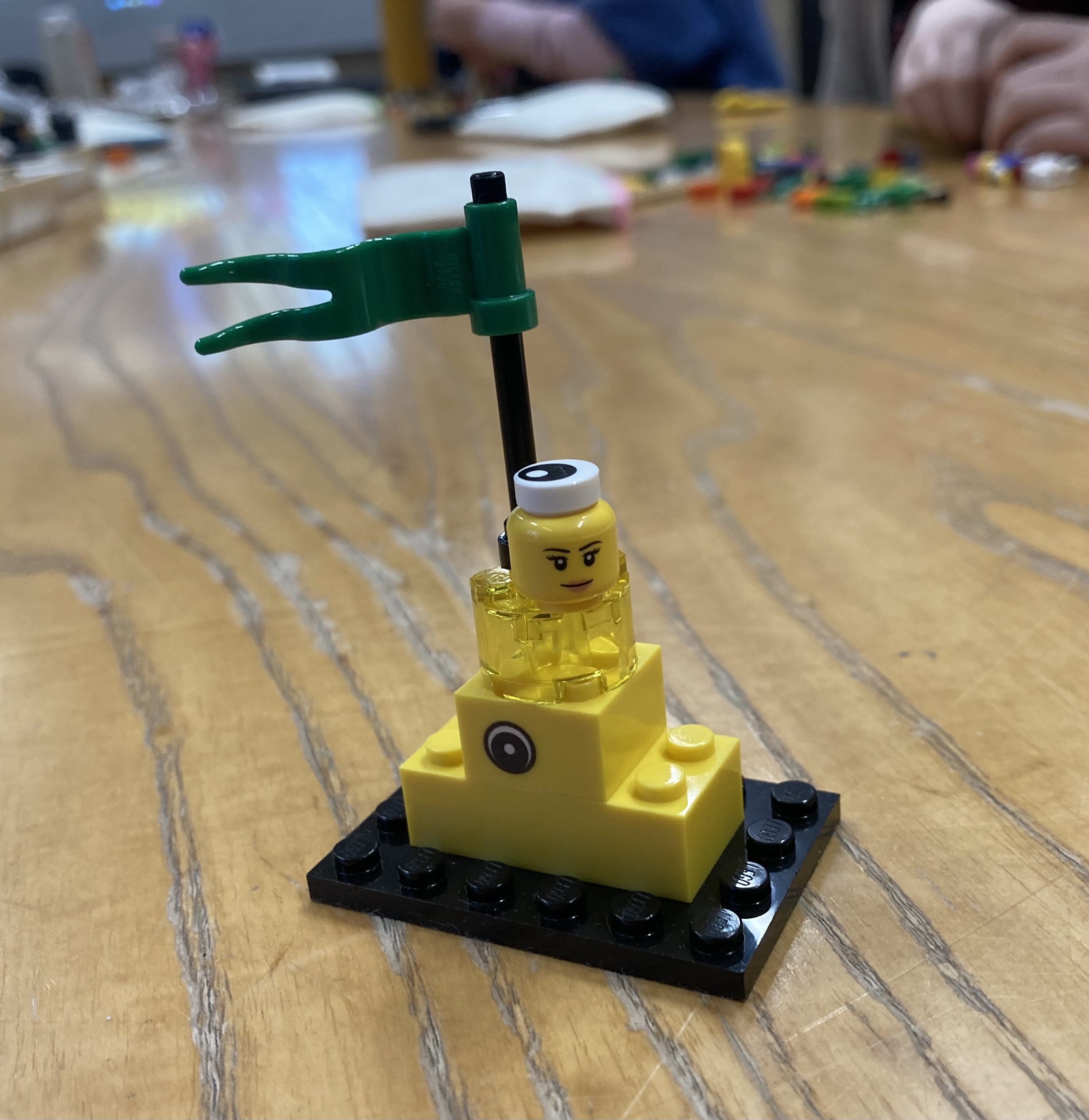
To be specific, it was Professor Pippa Steele and her graduate students in the VIEWS Project, who have the unique combination of (a) knowing potentially intimidating amounts about, say, Anatolian hieroglyphs and early writing from Cyprus and Crete, and (b) being playful enough to go on and create autobiographies, after the seminar was over, in Legos.
These are the kind of people I was hoping to meet when I moved to Cambridge, and it has to be said, a great time was had by all. I felt as though I was back at college myself, except that (a) I didn’t actually know anything when I was their age, (b) despite that, I was desperate to prove I was the smartest person in the room, and (c) nobody around yesterday’s seminar table was wearing a badly torn rugby shirt.
Bear with me, this is actually going to have a direct connection with the subject of this diary.
The VIEWS gang launched into a discussion of monuments that brought up all kinds of interesting questions. Who could actually read the text inscribed in them? Who commissioned that text? Who was it written for? Does the writing have the effect of connecting members of that culture into a kind of cognitive network? (There were those who argued that any sentence that contains the word “cognitive” is actually, in effect, a load of bollocks; others disagreed.) Do people who see the monument feel invested in the text even if they can’t read it?
And I realized: I am a monument maker. And you, my dear reader, if you back my campaign, will become a sponsor of monuments. You will have something in common with the great rulers of Egypt, Anatolia, Cyprus, and whatnot.
Let me break it down, as nobody in Cambridge says. If you are kind and generous enough to back this campaign to its goal, I’ll carve these wooden plaques that will, I hope, become (as everyone in Cambridge says) iconic.
They will be displayed in public places, in effect as both signage and art. Signage denotes authority, and this may be the first time the community has ever seen its script associated with authority. Art implies respect and the time and effort of workmanship and creativity that bespeak commitment, belief, even love. These are terms they may never have accorded themselves.
The plaques also represent recognition—in this case, recognition from across the seas, from the greater world, from the privileged. Thes are communities that are accustomed to being ignored, demeaned, harassed, even arrested by their more powerful immediate neighbo(u)rs.
Once upon a time, I told the seminar group, there was a peaceful kingdom called Champa, located roughly where central Vietnam now lies. In the mid-nineteenth century they were overrun and subjugated by the Vietnamese, and like all conquered people, became the equivalent of poor cousins.
One way they decided to retain their sense that they were once a people worthy of respect, was to continue to use their own traditional script, and when it came to determining which model they would use for their letterforms, they used the last temple to be built before they were conquered, humiliated, dispersed.
If you back my campaign to the point of success, one of the scripts I’ll carve and send will be Cham. A small monument.
You can support my current campaign—and in fact I really, really hope you do—HERE.
